
Block-Paved Driveways —
Classic, Repairable, Built
for 25+ Years.
Concrete and clay block-paved driveways installed on full-depth sub-bases with concrete-haunched edges and vibrated kiln-dried sand joints. The traditional finish, done to the standard it deserves — with a fixed written price and up to a 10-year workmanship guarantee.
- 18 years' experience
- Checkatrade 10/10 (33+ reviews)
- Up to 10-year workmanship guarantee
- £2M Public & Employers' Liability
- Site visit usually within 2 days
What we build, who it's for, and why it's worth doing properly.
What it is
A block-paved driveway installation — from excavation and sub-base to laying pattern, cut-in edges, kiln-dried sand jointing and optional sealing. We source blocks from most major UK manufacturers to suit your budget and style.
Who it's for
Homeowners who want a classic, kerb-appeal-driven finish that individual blocks can be repaired without lifting the entire drive. Excellent for period, traditional and new-build homes alike.
When it's needed
When the current drive is cracked, sunken or missing edges; when the front of the house needs a real lift; when you want a finish that can be extended or matched later; or when you want the flexibility to add a lighting scheme or drainage channel later without ripping out the whole surface.
Why professional install matters
Block paving is the most repairable and longest-lived driveway finish when installed properly. It's also the finish most often laid badly — on a shallow sub-base, with no proper edge restraint, and jointed with the wrong sand. Done right, it lasts 25+ years.
What happens when the job is done cheaply — or left too long.
Block paving is a finish that shows off good work — and shows up bad work even faster. Sunken tyre tracks, spreading edges, weeds in every joint and a moss-stained wash across the whole drive are all avoidable, and all common.
Sunken tyre tracks
Sub-base too thin or insufficiently compacted. Two lines slowly form where the car sits, then water pools there, then ice, then the blocks crack.
Spreading edges
No concrete-haunched edge restraint. The whole drive slowly walks outwards under load, joints open up and the surface loosens.
Weeds & joint wash-out
Wrong sand grade or no vibrating in. Sand washes out in the first year and every joint becomes a seed bed.
Common mistakes we're called out to fix:
- Using construction sand instead of kiln-dried sand for joints — it holds moisture and grows weeds and moss.
- Butting blocks directly against soft edges (lawn, borders) with no edge restraint — the drive shifts outward within a year.
- Stretcher-bond pattern on a driveway — mechanically weaker than 45° herringbone under vehicle load.
- Skipping the whacker plate after jointing — sand never locks in properly.
- Cutting blocks dry with an angle grinder next to the finished drive — dust bonds to the surface and permanently marks it.
A clear, staged system — so you always know what's next.
-
1
Free site visit & block selection
James measures the drive, discusses laying patterns and colours, and brings block samples to the site visit so you can see and feel the options in daylight.
-
2
Fixed written quote
One price, itemised across excavation, sub-base, edging, blocks, cuts, sand, sealing and clean-down. No 'from' figures, no verbal add-ons.
-
3
Excavation to full depth
200–250mm dig for a vehicle-loaded drive, geotextile membrane laid over the sub-grade to stop clay pumping through.
-
4
Sub-base & edging
150mm compacted MOT Type 1 in two layers with a whacker plate. Concrete-haunched edge restraint installed before any blocks are laid — non-negotiable.
-
5
Blocks laid to pattern
50mm grit-sand laying course screeded, blocks laid dry to your chosen pattern (45° herringbone for vehicle areas), cuts finished with a block splitter and wet saw off-drive.
-
6
Jointing, sealing & clean-down
Kiln-dried sand brushed into joints, vibrated in with a whacker plate on rubber mat, second brushing, full drive pressure-cleaned, optional block sealer applied.
Specific outcomes — not vague promises.
The traditional finish, done right
Herringbone at 45° for vehicle traffic, stretcher or basket-weave for footpaths. Right pattern in the right place.
Repairable in-place
Damage a block and it can be lifted, replaced and re-sanded — no ripping up the whole drive.
25+ year lifespan
On a full-depth sub-base with proper edging, block paving comfortably lasts 25 years with occasional re-sanding.
Concrete-haunched edges as standard
Every drive gets a proper edge restraint. This is the single biggest reason our drives don't spread.
Typically 2–4 days on site
Most residential drives finish in 2–3 days. Larger or feature-heavy drives (borders, patterns, mixed ranges) run 4 days.
Independently reviewed
Checkatrade 10/10 across 33 reviews. Real driveways, real Darlington and Stockton customers.
The detail most contractors won't put in writing.
Block paving is a system: block, laying course, sub-base, edge restraint and jointing all working together. Here's the detail that separates a drive built to spec from one built to the cheapest quote.
Concrete vs clay blocks
Concrete blocks: huge range of colours, sizes and textures across the major UK manufacturers. Cost-effective. Colour is added during manufacture — some cheaper ranges fade over time, quality ranges hold colour for 15+ years. Clay blocks: fired natural clay, colour is integral (never fades), harder and denser than concrete, more expensive. Classic look on period homes.
Laying patterns & where to use them
45° Herringbone: strongest interlock under vehicle load, standard pattern for driveways. 90° Herringbone: still strong, slightly less so than 45°. Stretcher bond: fine for footpaths, mechanically weak for cars. Basket-weave: decorative feature panels only, not full drives. Circle features and inlays can be worked in around parking areas.
Sub-base & edging spec
Vehicle-loaded drive: 150mm compacted MOT Type 1 over geotextile membrane over undisturbed sub-grade. Laying course: 50mm sharp/grit sand, screeded (never 'dot-and-dabbed'). Edge restraint: concrete-haunched on all soft edges — kerb, edging blocks or the driveway's own edge course haunched with C20 mix concrete.
Jointing & sealing
Kiln-dried silica sand only — never building sand, never sharp sand. Brushed in dry, vibrated with a whacker plate on a rubber mat until joints won't take any more. Second brushing to top up. Sealing is optional: a good breathable block sealer helps colour retention and reduces moss, but it's not essential. We'll advise honestly.
Drainage
Block paving is impermeable, so drainage back onto your own land is required for drives over 5m² (planning). ACO linear channel drains at the property threshold, falls set at 1:80 minimum away from the house, and a soakaway on the plot handle this cleanly.
Residential vs commercial
Residential: 150mm sub-base, 50mm laying course, 50mm block, herringbone 45°. Commercial and heavy-vehicle use (yards, holiday-park access): 200–225mm sub-base, thicker 80mm blocks, and often a bound base course underneath. We handle both.
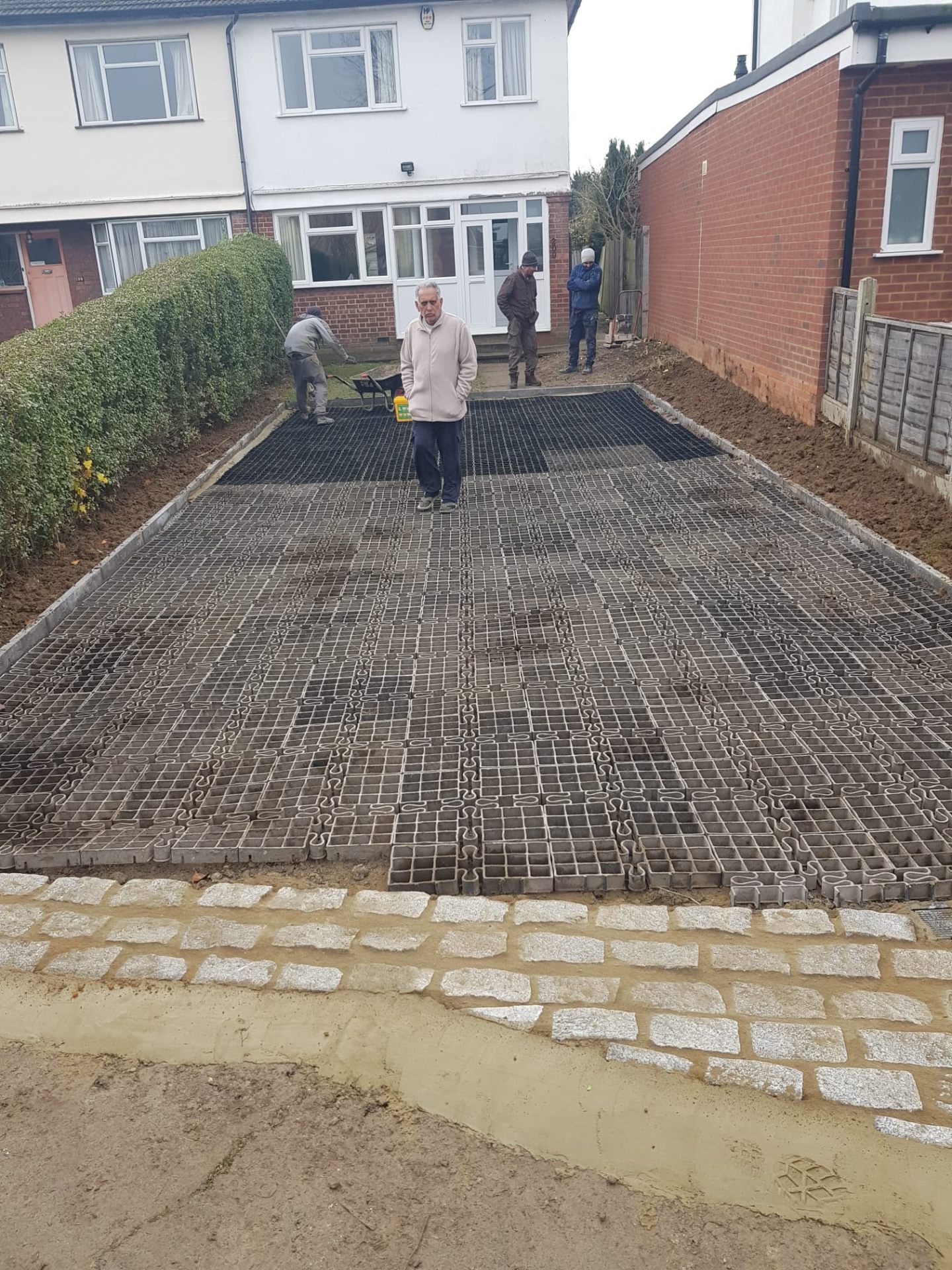
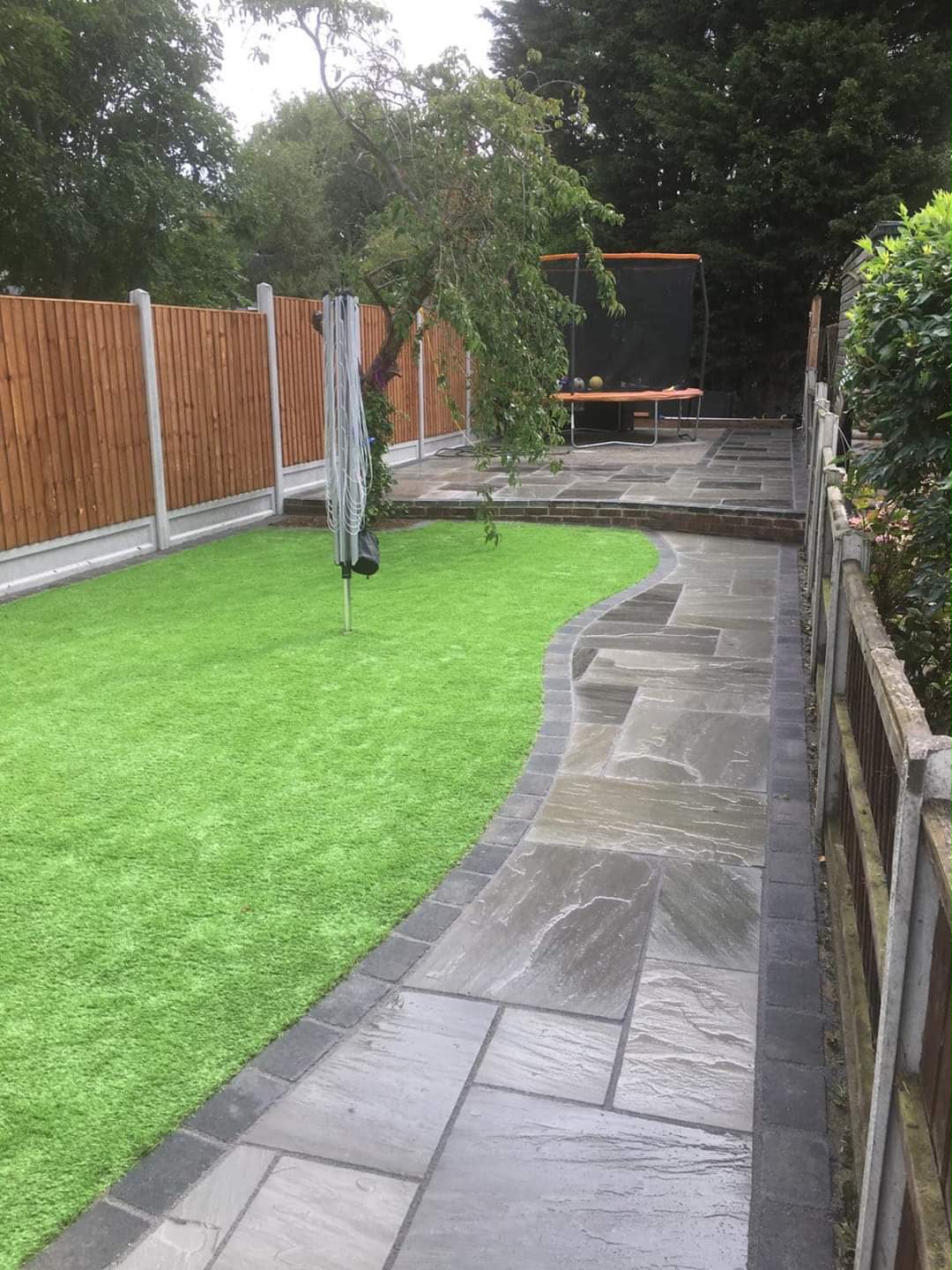
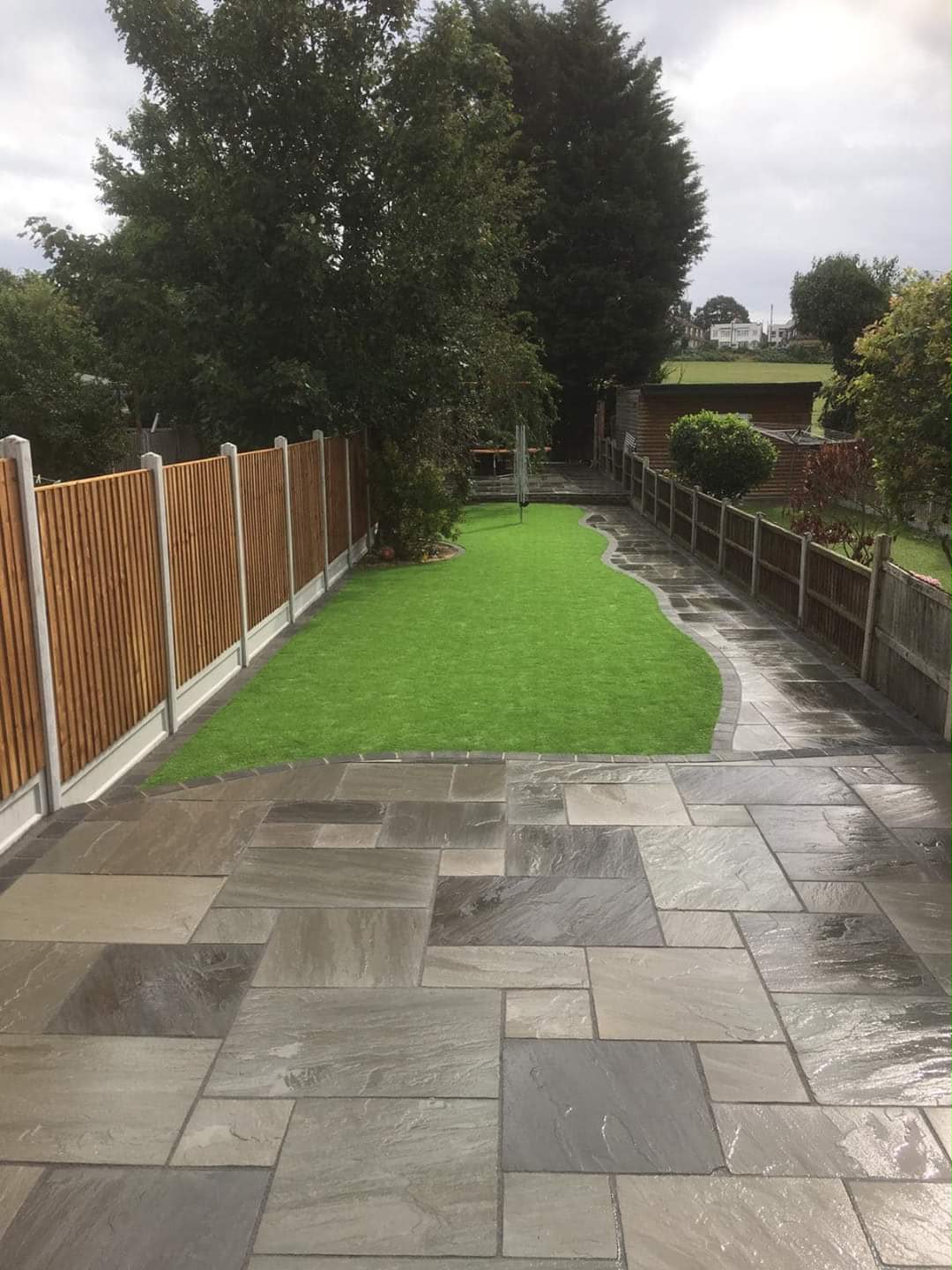
A few we've finished — block paving across the North East.
Real jobs, real customers. Drag the divider on the before/after images to see what was there before we started.
 BeforeAfter
Frequently asked questions.
Ready for a block paving that lasts?
Free site visit within a couple of days. Fixed written price shortly after — no deposit, no pressure, no ballpark guesswork. Backed by up to 10-year workmanship guarantee and £2M public liability insurance.
Mon–Sat, 7am–7pm • Yard 10, Wards Industrial Estate, Darlington DL1 2UQ