
Sleeper Walls &
Raised Beds — Darlington
& the North East.
Oak and pressure-treated sleeper retaining walls and raised planting beds, built with proper drainage, geotextile membrane and threaded fixings. Structural where they need to be, decorative where they don't. Fixed written quotes, up to 10-year workmanship guarantee.
- 18 years' experience
- Checkatrade 10/10 (33+ reviews)
- Up to 10-year workmanship guarantee
- £2M Public & Employers' Liability
- Site visit usually within 2 days
What we build, who it's for, and why it's worth doing properly.
What it is
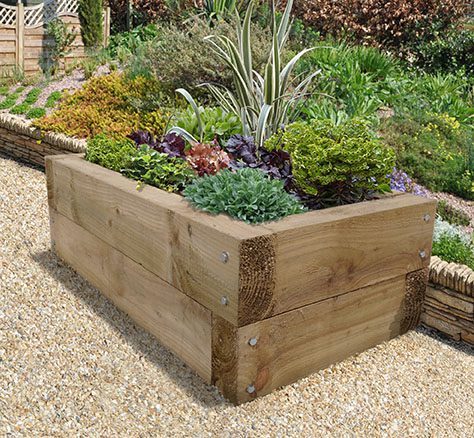
A full sleeper installation — from excavation and drainage behind the wall, through concreted post supports or through-bolted rebar, to stacked sleeper courses, edging and top-cap detailing. Raised beds finished with geotextile, drainage and topsoil ready for planting.
Who it's for
Homeowners with sloping gardens that need levelling, anyone wanting defined planting beds instead of edging strips, and gardens where a low retaining wall would create a proper step change between lawn, patio and driveway.
When it's needed
When the garden slopes and lawn refuses to grow at one end, when you want raised beds for easier planting and less weeding, when a driveway or patio needs to step down from the lawn, or when a low retaining feature would tidy a piecemeal layout.
Why professional install matters
Sleeper walls carry real load — soil, water and frost heave all push against the back face. Cheap installations without drainage or proper fixings bulge outward within 3–5 years. Done right — geotextile behind, gravel drainage, threaded rebar or through-bolts — a sleeper wall lasts 15–20 years even under retained ground.
What happens when the job is done cheaply — or left too long.
The most common call-out we get on sleeper walls is 'it's leaning at the top' or 'the paint's coming off and there's rot underneath'. Both trace back to the same three shortcuts.
Bulging retaining walls
No gravel drainage or geotextile behind the sleepers means hydrostatic pressure from wet soil pushes the wall out every winter. Once it starts, it accelerates.
Rotting timber
Untreated softwood sleepers sitting on wet ground rot from the bottom up. So do treated sleepers that were cut without re-treating the ends.
Splitting on drilled holes
Sleepers drilled undersized for the rebar or bolt eventually split along the grain — especially oak. The wall then loses its structural connection.
Common mistakes we're called out to fix:
- No drainage behind a retaining wall — first wet winter and the wall bows.
- Untreated softwood sleepers in ground contact — rotten in five years, no matter how thick the timber.
- Sleepers laid dry-stacked with no vertical connection — first frost heave and courses slip.
- Cutting sleepers with no end-grain treatment — soaks up water at the cut and rots from there.
- Landscape-fabric-only backing instead of geotextile plus a gravel drainage layer — fabric silts up and stops working.
A clear, staged system — so you always know what's next.
-
1
Free site visit & levels check
James walks the garden, checks levels front-to-back and side-to-side, notes drainage flow paths and existing plant / turf you want to keep.
-
2
Fixed written quote
One price for the whole build — sleepers, fixings, geotextile, drainage aggregate, topsoil where relevant. Timber grade specified.
-
3
Excavation & drainage layer
Trench excavated to firm ground for the bottom course, gravel drainage layer behind the wall footprint, land drain to a soakaway or outlet where the wall retains more than 500mm of ground.
-
4
Base course levelled & fixed
First course of sleepers laid on compacted stone, levelled with a laser, drilled and threaded onto vertical rebar cast into concrete pads at each joint.
-
5
Courses built up & tied together
Sleepers stacked with staggered joints, drilled and through-bolted or continued on rebar. Geotextile membrane pinned to the back face before backfill. Cut ends re-treated with end-grain preservative.
-
6
Backfill, topsoil & handover
Gravel backfill for the drainage layer, geotextile folded over, topsoil filled to level for raised beds, walkaround with you and written guarantee.
Specific outcomes — not vague promises.
Drainage designed in
Every retaining wall we build has a gravel drainage zone, geotextile membrane and a land drain where needed. No hydrostatic pressure, no bulging.
Structural fixings, not just stacked
Threaded rebar through drilled sleepers or through-bolted courses. Walls tied together vertically so frost heave can't slip a course.
Grade-A green oak or treated softwood
Oak for decorative and long-life installations, high-grade pressure-treated softwood where budget matters. We'll explain the trade-off honestly at survey.
Typically 2–4 days on site
Most residential sleeper installations up to 10m of wall or 3–4 raised beds finish inside 4 days.
Raised beds ready for planting
Geotextile-lined, drained and topsoil-filled — you can plant into them the day we hand over.
Up to 10-year workmanship guarantee
Written into the quote. Timber life 15+ years with drainage, less without — we'll be honest about what to expect.
The detail most contractors won't put in writing.
Sleeper walls range from a single-course edge to a two-metre retaining structure. Here's how the build changes across those use-cases and where corners commonly get cut.
Decorative edging (1–2 sleepers high)
Single or double course to define a bed edge or path. Laid on compacted stone, pinned to the ground with rebar into pre-drilled holes. Geotextile behind if adjacent to lawn to stop soil migration. Simple, effective, cheap.
Raised planting beds
Typically 3–4 courses (450–600mm) high. Corners drilled and threaded on vertical rebar cast into concrete pads. Geotextile lined on the inside face, drainage holes at the base, filled with topsoil / compost blend. Perfect for vegetables, herbs and accessible planting.
Retaining walls (500mm–1.2m)
Trench footing on firm ground, gravel drainage layer behind the full height, geotextile membrane against the sleepers, land drain at the base tied into a soakaway or outlet. Sleepers threaded on rebar or through-bolted every 1.2m. Cap course laid horizontally over verticals for a clean top edge.
Sleeper steps into a slope
Cut lengths of sleeper set into an excavated stringer trench, backfilled and topped with either gravel, paving or planting. Riser height kept consistent at 150–180mm; going 300mm minimum for comfortable walking.
Oak vs pressure-treated softwood
Oak: dense, hard, silvers gracefully, 20+ year lifespan even in ground contact, premium cost. Pressure-treated softwood: cheaper, uniform appearance, 10–15 year lifespan with drainage, less without. Both have their place — we'll match to your budget and the use.
What we don't do
Full engineered retaining structures over 1.2m high are structural work and typically need a designer's calculation. We build to that spec when supplied — we don't design the calculation ourselves. Below 1.2m, we design and build in-house.
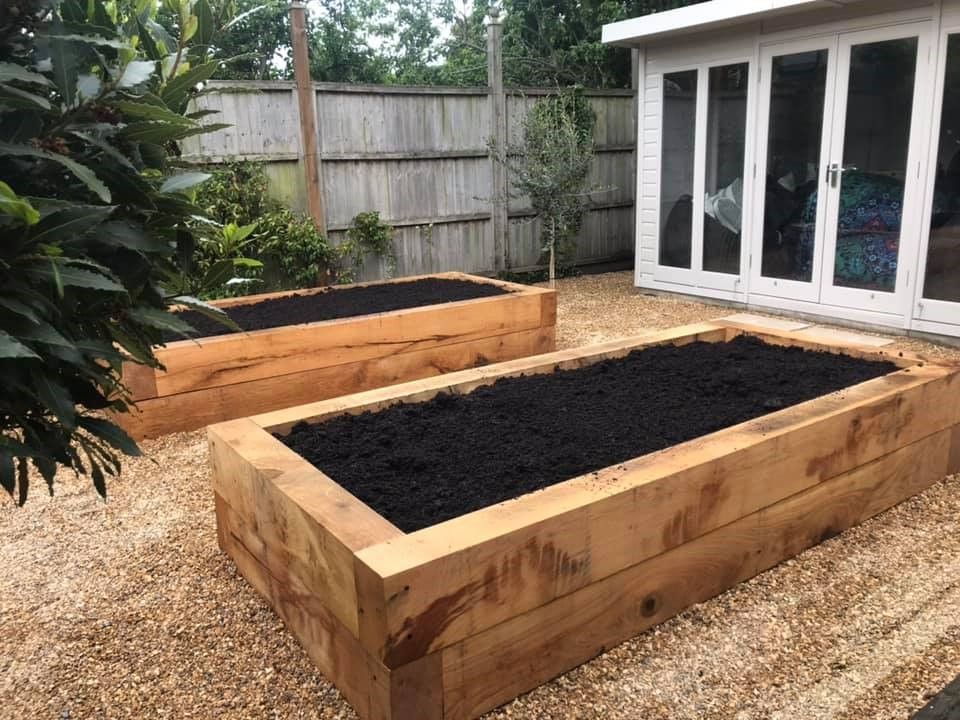
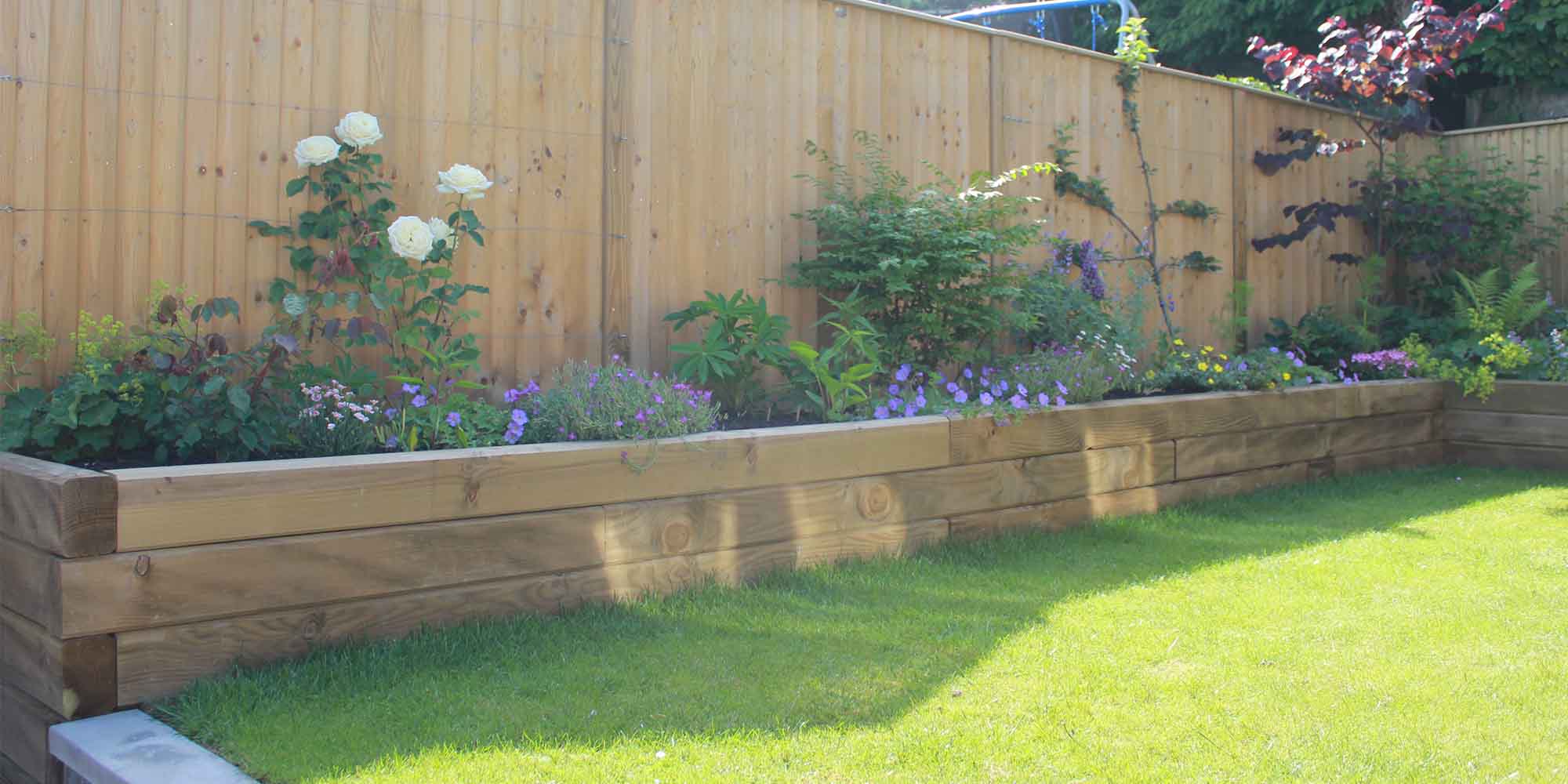
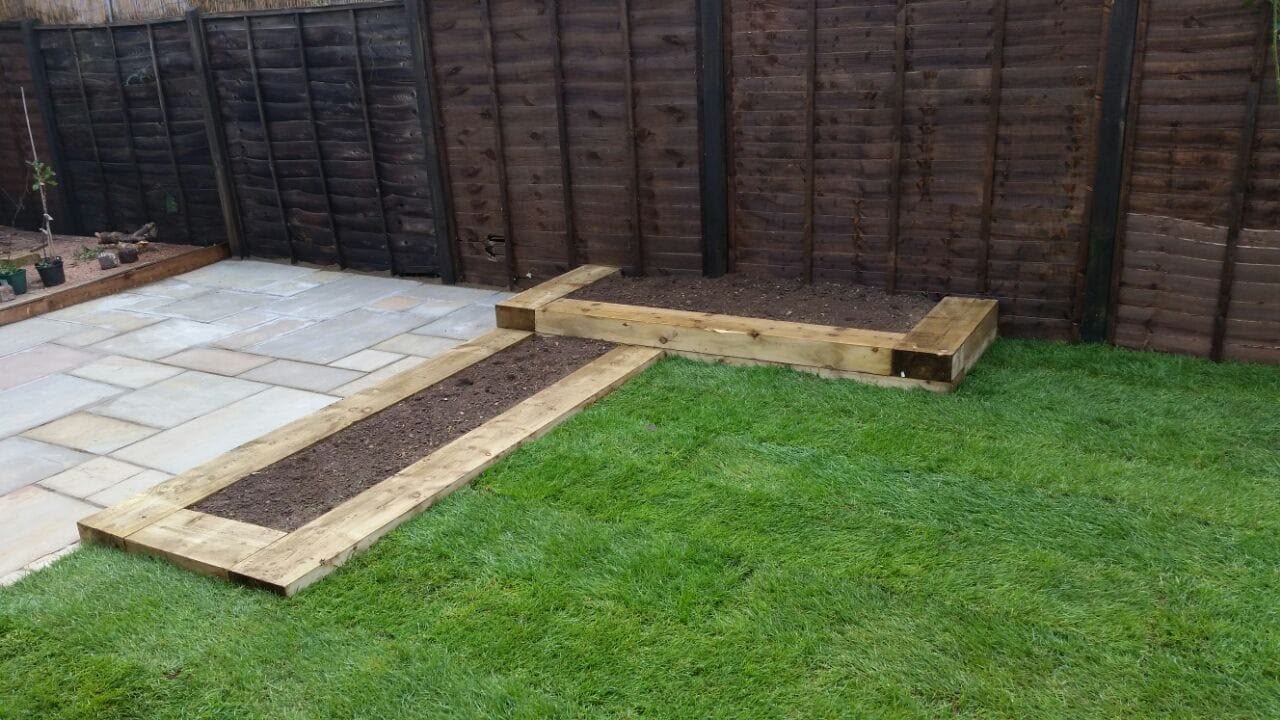
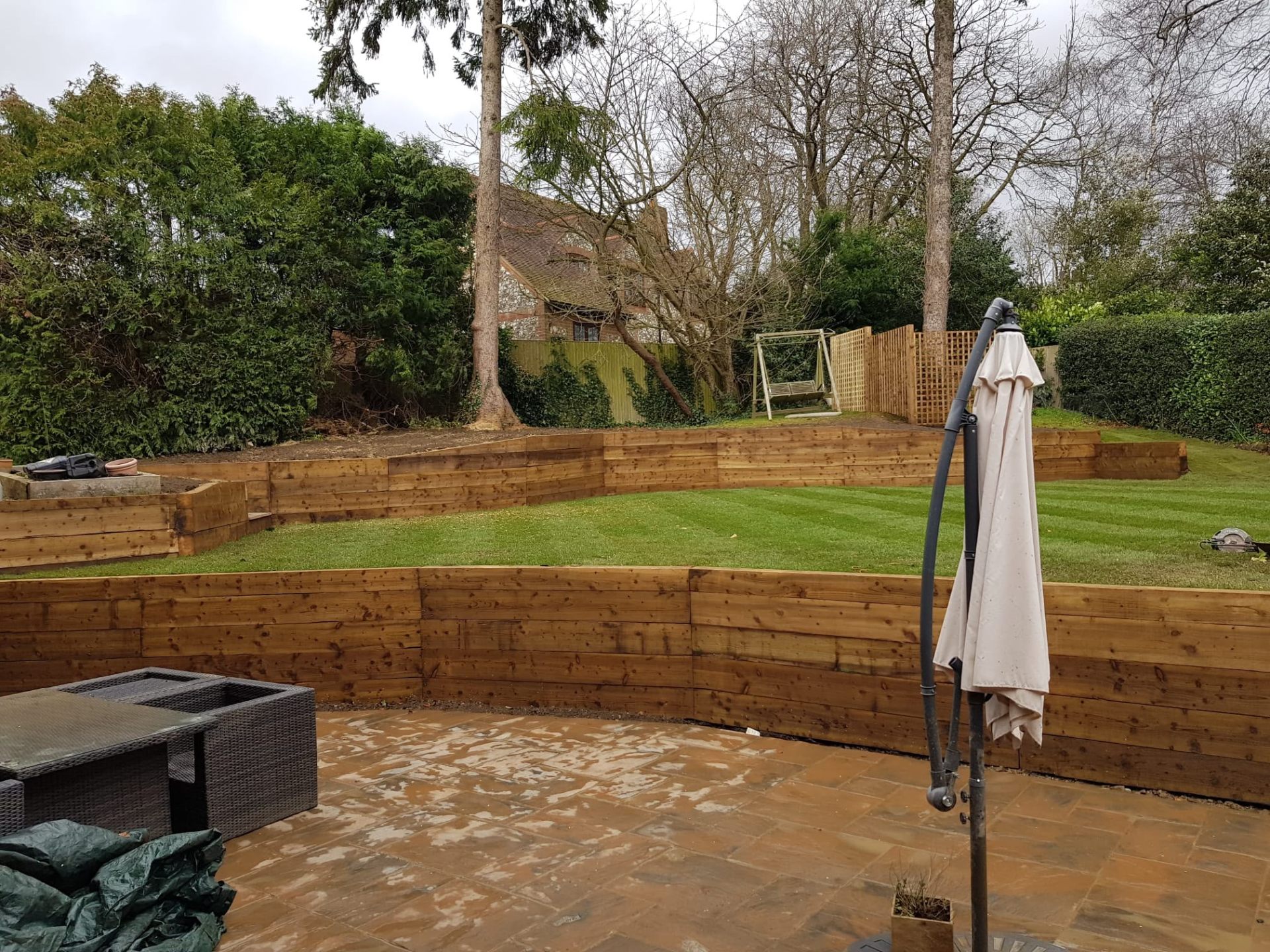
A few we've finished — sleeper walls & raised beds across the North East.
Real jobs, real customers. Drag the divider on the before/after images to see what was there before we started.
Frequently asked questions.
Ready for a sleeper walls & raised beds that lasts?
Free site visit within a couple of days. Fixed written price shortly after — no deposit, no pressure, no ballpark guesswork. Backed by up to 10-year workmanship guarantee and £2M public liability insurance.
Mon–Sat, 7am–7pm • Yard 10, Wards Industrial Estate, Darlington DL1 2UQ